




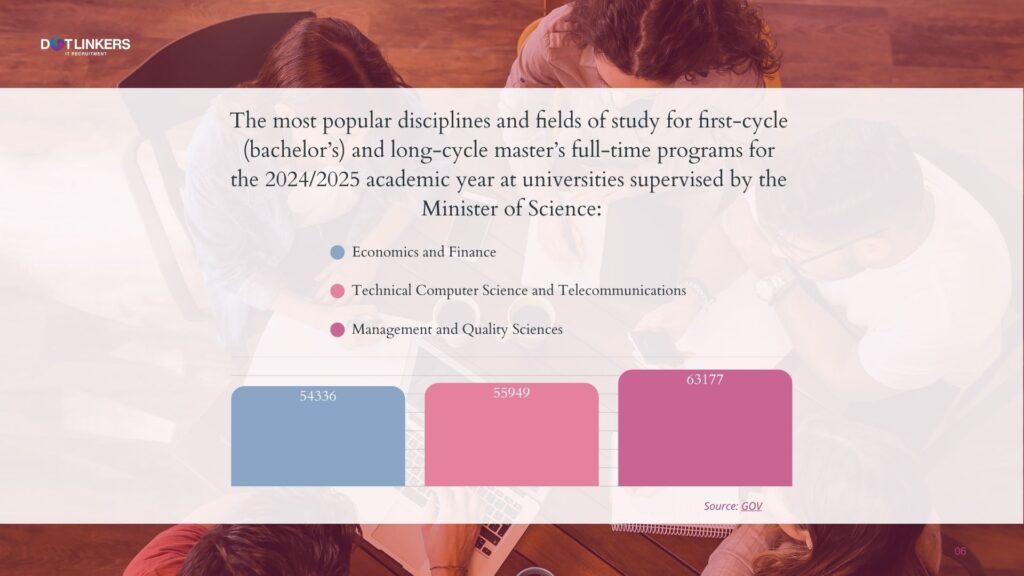
The availability of qualified IT specialists in Poland is one of the key factors influencing the development of the technology sector in the country. As the leading IT market in Central and Eastern Europe, Poland has a strong educational base that produces thousands of new graduates from technical fields each year. Polish universities such as Warsaw University of Technology, Wroclaw University of Science and Technology, AGH University of Krakow, and Gdansk University of Technology educate specialists in various IT domains, including software engineering, artificial intelligence, cybersecurity, and blockchain technology. This education is considered to be among the highest standards in Europe, making Poland an attractive destination for companies seeking skilled professionals.
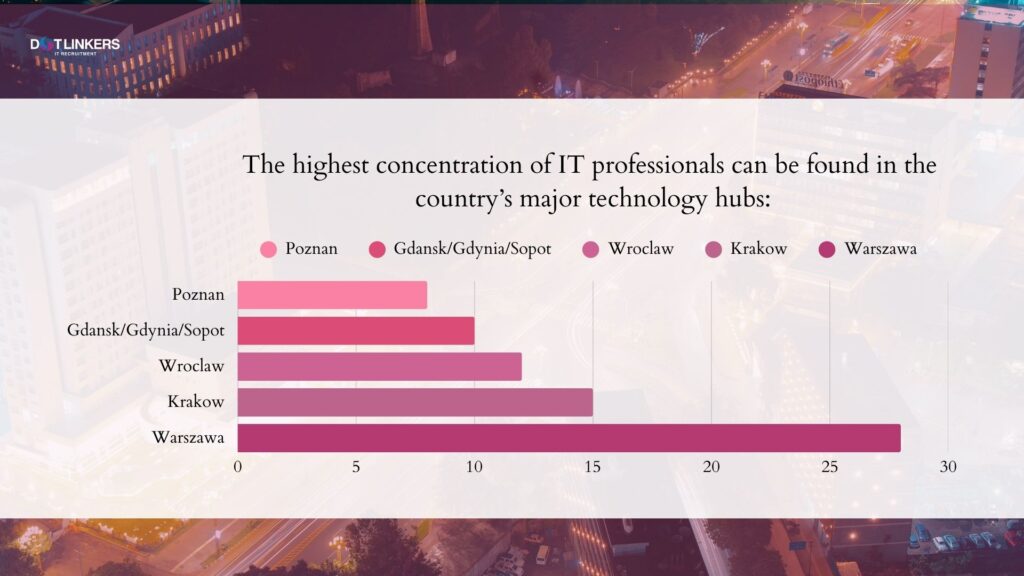
According to the latest estimates from 2024-2025, there are approximately 410,000 IT specialists currently working in Poland. The highest concentration of IT professionals can be found in the country’s major technology hubs: Warsaw (about 25-30% of the total), Krakow (around 15%), Wroclaw (about 12%), Gdansk/Gdynia/Sopot (around 10%), and Poznan (8%).
Table of Contents
The highest concentration of IT professionals can be found in the country’s major technology hubs
Map of IT talent in Poland: cities, migration, and new career paths
The highest concentration of IT specialists is found in major Polish cities such as Warsaw, Krakow, Wroclaw, Gdansk, and Poznan. These cities host the majority of tech companies, outsourcing centers, and international corporations offering attractive job opportunities for software engineers, analysts, and system architects. In smaller towns, the availability of qualified specialists may be more limited; however, the rapid development of remote work and remote recruitment is changing this landscape.
Increasingly, companies are choosing to hire IT professionals regardless of their location, which opens up job opportunities for people living in smaller towns or even rural areas. Poland is also attracting IT specialists from other countries, especially from Central and Eastern Europe, who are looking for better career prospects and higher salaries.
Many foreign companies are choosing to open offices in Poland, which fosters the exchange of knowledge and experience and increases the overall availability of candidates in the market. A significant number of IT professionals have relocated to Poland from Ukraine, Belarus, and Russia, allowing recruiting companies to tap into this talent pool without the risks associated with employing them in their home countries. As a result, the Polish IT sector is becoming more diverse and dynamic, allowing companies to benefit from a rich talent pool.
It is also worth noting the growing popularity of alternative educational paths in the IT sector. In addition to traditional higher education, coding boot camps, programming schools, and online courses have emerged, enabling individuals to quickly acquire specific IT skills. Thanks to these initiatives, the job market is seeing an influx of people who previously had no technical education but decided to change careers. This phenomenon increases the overall availability of specialists, although it also comes with certain differences in skill levels between those who completed traditional technical studies and those who went through intensive vocational training.
How long does it take to find the right IT specialists?
The time required to find the right IT specialists in Poland can vary depending on several factors, such as the type of skills sought, location, salary offer, and market competition. On average, the recruitment process can take anywhere from a few days to several weeks. However, in the IT industry, the time needed to find suitable candidates can be more dynamic depending on the specifics of the project.
For popular IT specializations such as Java, Python, or JavaScript developers, the recruitment process may take between 2 to 4 weeks, as the availability of candidates in these areas is relatively high, especially in larger cities like Warsaw, Krakow, Wroclaw, or Gdansk. In smaller cities or regions where access to IT specialists is more limited, the recruitment process may take longer. Additionally, the growing competition for skilled workers may extend the recruitment timeline, particularly during periods of high demand for IT talent. In the case of more niche specializations, such as artificial intelligence, blockchain, or cybersecurity, the process of finding suitable candidates can take significantly longer, even 1-2 months.
Recruitment duration also depends on several additional factors. If a company offers competitive salaries, flexible working conditions (e.g., remote work), attractive projects, and opportunities for growth, the hiring process can move more quickly. On the other hand, companies with less competitive offers or limited employer branding may face longer recruitment timelines. It is also worth noting that modern recruitment technologies (such as online platforms, job portals, and recruitment agencies) can significantly shorten the time required to find suitable candidates. Companies can leverage existing databases of specialists or outsource recruitment to professional agencies, which can speed up the entire process. In some cases, remote work models also facilitate faster hiring as geographic limitations become less relevant.
